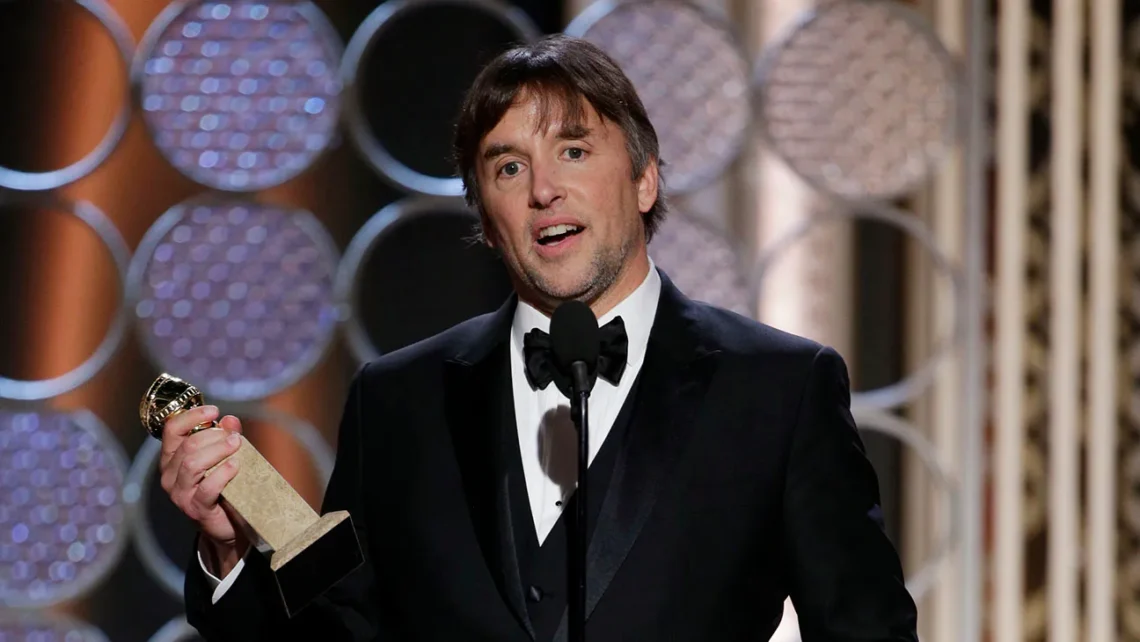
Richard Linklater The director and actress, fictionalize what it was like to construct the 1960 film Breathless in their new Golden Globe-nominated movie.
Working 65 years apart, directors Jean-Luc Godard and Richard Linklater share a certainty: cinema moves onward when rules are treated as suggestions. After high-jumping from criticism to construction, Godard moved at a breakneck clip—twenty-three days of shooting. No permits. No schedule. Just a girl and a gun. He was now a director—an auteur—and nothing could stop the film that accompanied, Breathless, or the tidal wave of the French New Wave it came to illustrate.
Table of Contents
Richard Linklater Nouvelle Vague and the Art of Making Cinema to Inquiry Cinema
Linklater’s most recent film, Nouvelle Vague, follows Godard’s frantic race towards the pantheon of cinema. At the beginning of the film, actor Guillaume Marbeck portrays Godard, who clings to the belief that “the most effective way to critique a film is to create one.” This statement serves as both a declaration and a challenge from the late director’s school of thought. Linklater further develops this idea as the story progresses, with Zoey Deutch playing a supportive role in this endeavor.
Deutch inhabits the gamine charm of Breathless love, delight, and French New Wave icon Jean Seberg: blond pixie cut, striped shirts, playful French, long cafe lunches. Her achievement has helped Nouvelle Vague earn a Golden Globe designation. For CULTURED, she led a conversation with Linklater on the coincidence of Hollywood and the constraint of playing an icon you’ve never conceived.
Deutch: It’s been more or less 10 years since we worked cooperatively on Everybody Wants Some!! How does it feel to bring together, and how has your expressive shorthand progressed since our last project?
Richard Linklater: It was remarkably different, and that was its beauty. Having previously collaborated is beneficial, as it allows for an understanding of each other’s rhythms and fosters an existing trust—it is truly wonderful. One of my greatest pleasures is reestablishing connections with individuals I wish to collaborate with. The only sorrow I experience in this world is when circumstances prevent me from working with the same actors again. I mentioned this long ago, Zoey. I said to you, Hey, I’m going to undertake this project, and you resemble Jean Seberg—I believe you can accomplish it.
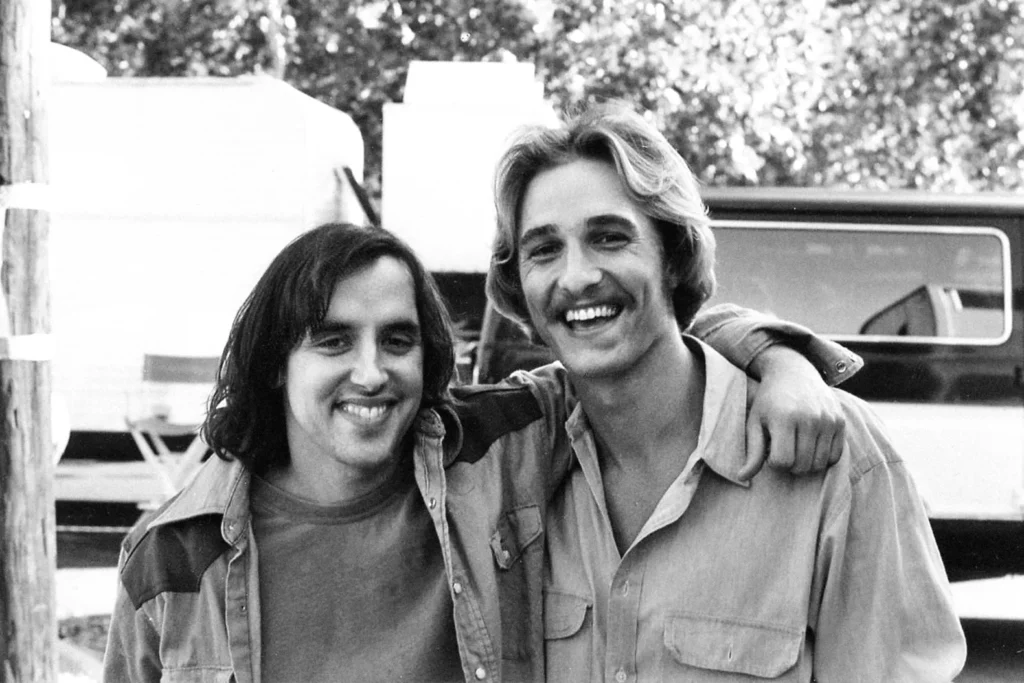
Richard Linklater Time, Interchange, and the Rare Gift of Returning
Deutch: It was a significant advantage to collaborate with you at the age of 19, and again when I turned 29. Your approach—the manner in which you prefer to operate and the framework you have entrenched—seemed unparalleled, yet I do. I felt genuinely grateful for the additional opportunity to learn from you and to be somewhat more engaged than I was during my teenage years. Customarily in life, one reflects on past opportunities and thinks, Regrettably, I wish I had another chance at that, or I wish I could have respected it more. It was truly remarkable to have the opportunity to confess the changes that have occurred within me. For More Articles Like That
What elements of the language or energy of Breathless do you still perceive as being ahead of their time?
Richard Linklater Belmondo, Seberg, and the Bubble That Time Couldn’t Explode
Richard Linklater: That film is considered quite old in terms of cinematic history. What was once perceived as fresh and innovative in 1960 is now merely half as old as the entire history of cinema, yet that film still embodies a certain punk-rock spirit. It remains irreverent and tells a story in a distinctly different manner. In some respects, it remains somewhat shocking. When [Jean-Paul] Belmondo, who portrays Michel Poiccard in Breathless, gazes directly at the camera and provocatively tells the audience to go fuck themselves if they do not appreciate the country, such boldness is rarely seen even today.
I find myself continually captivated by Belmondo and Seberg. They are the central figures in this narrative, yet, to be honest, I often forget their physical appearances. In my mind, you and Aubry [Dullin] represent them. I remain enveloped in the pleasant bubble we have created, where you embody their essence. I have a preference for our temperament.
Richard Linklater Defending Godard: Genius, Sensitivity, and the Cost of Constant Critique
Deutch: You and Godard possess distinct approaches to filmmaking. Whenever someone makes negative remarks, you intervene to uphold his dignity, his creative expression, and his integrity.
Richard Linklater: The reality is that Godard’s platform is apart from everyone else. I believe I fall within the more mainstream range of filmmaking, while many directors are often perceived as challenging to work with. In Godard’s situation, I think he is maneuvering his own neurodivergence. By nature, he tends to be critical, and I feel he may not have been very sensitive to the emotions of others—regardless of where that places him on our spectrum.
I believe he accidentally engaged in behaviors that could hurt others’ tenderness. Despite this, he had long-lasting friendships and was not an unkind person. He was simply an intellectual individual who felt compelled to assess everything
Deutch: What drew you back to Breathless, particularly? Why did it feel like the right moment to revisit Godard’s archetype set?
Richard Linklater: This film has been in development for a considerable amount of time. I have never regarded Breathless as my preferred work by Godard. It stands out as his most Eccentric film. Although it is his debut, I believe he stayed somewhat detached from Breathless throughout his life. He carried much of that small talk into his future works. For More Details
Deutch: It is amusing; I inquired the other day, How many projects are you currently engaged in? The answer was quite a number. Considering the numerous films you have produced over the past ten years, it seems there exists a spiritual, almost collective unconscious phenomenon that occurs when the timing is appropriate. I have appreciated this aspect as a positive attribute of the craft, rather than a negative one: you engage in various projects, and if something does not materialize, it does not signify the end for that piece; it simply indicates that the timing is not right.
Richard Linklater: Nearly every film I have created has undergone a period of development. Years ago, I submitted Nouvelle Vague to several producers and an individual who was the head of a company. I believed that I was prepared to bring this project to fruition. It is truly gratifying to see a project you have invested so much time in come to life.
Deutch: Could you please discuss your experience on the set of Nouvelle Vague?
Richard Linklater: It was a completely different experience for me, but in a positive sense. Zoey and I were the only Americans in the vicinity. We had a French crew, which created a sort of bubble around us, and I truly respected that bubble. As the director of a film, you are privy to the excitement surrounding every issue. However, this time, I felt somewhat excluded.
If someone had described to me in English what was happening, I could have assisted them. It appeared to be such a visual art endeavor for me—it was essentially the world of 1959 that we were bringing to life. It was pure joy. How did you feel about it, Zoey? On the surface, it was a bit chaotic.
Deutch: I am accustomed to chaos as a necessary condition. One of the aspects I recall is the intimate and compact nature of the setting. For context, we prepared in any available rooms in proximity. The weather was notably cold, and it rained nearly every day during our filming.
Richard Linklater: We shot it in August—it’s presumed to have a summer feel—but we were in coats.
Deutch: To me, it resembled the idealized version of being an actress. Simultaneously, it was quite intimidating, as I was perpetually preoccupied with thoughts about the French language and her physicality. Seberg exhibited a level of grace far beyond my own, and her movements were so distinct that, seriously, I experienced the least freedom I have ever felt while performing. I found myself unable to improvise or incorporate small additions. Despite feeling the most constrained I have ever been, I also experienced some of the greatest enjoyment I have ever had.
Richard Linklater: It was entirely about, What would Jean do? You are portraying Jean Seberg. She was not particularly proficient in French—if she mispronounced a word in French, then you had to replicate that. We found ourselves in a Jean Seberg box, yet it was quite a favorable box to occupy.
Deutch: I love her so abundantly. The pressure of playing an authentic person became so much clearer when I was in that world.
Richard Linklater: I experienced that as well, on behalf of all these individuals.
Deutch: That was a really big transition and recognition for me: If she got to see this, would she feel appreciated? I saw her.
Richard Linklater: From the very first moment you spoke as Jean Seberg, I sensed her smile somewhere. Although no one in this film remains on Earth, they have all reunited once more. Despite the turmoil in Jean’s life at this point and the professional trauma she had endured, here she embodies Jean Seberg. She is in France, she is youthful, and everything is still before her.